
Views: 0 Author: Site Editor Publish Time: 2026-01-13 Origin: Site


Thermal spray coating is a versatile technique used to protect surfaces from wear, corrosion, and high temperatures. Choosing the right material is key to maximizing durability, efficiency, and performance. From metals and alloys to ceramics, carbides, and abradables, each thermal spray coating material offers unique benefits for industrial machinery, aerospace, and energy applications. In this guide, we’ll explore the types of materials used, how they perform, and tips for selecting the best coating for your specific application.
Thermal spray coatings are layers of material applied to a surface to improve wear, corrosion, or heat resistance. They work by spraying molten or semi-molten particles onto a part, forming a protective barrier. It’s a versatile process used in aerospace, industrial machinery, and energy applications.
Choosing the right material is critical. It affects durability, performance, and efficiency. Using the wrong coating can lead to premature wear, poor adhesion, or failure under extreme temperatures. We focus on materials engineered for specific environments and performance needs. Material choice determines coating performance, adhesion, and lifespan. Using the wrong material can lead to premature wear, cracking, or poor thermal or chemical resistance. Proper selection ensures efficiency and durability.
Thermal spray coatings rely on materials engineered to deliver performance in harsh environments. They protect surfaces from wear, corrosion, and high temperatures. Choosing the right material directly impacts efficiency, durability, and lifespan of machinery.
Abradable materials are soft coatings designed to wear selectively, maintaining tight clearances between moving parts. They are commonly applied in jet engines, gas turbines, and compressors, where blade tips or moving components interact with the coated surface. By wearing preferentially, they reduce mechanical stress on more expensive components and improve overall efficiency. These coatings usually operate below 900 to 1,000 °F, and materials such as aluminum graphite or aluminum polyester are commonly used in these applications. Engineers select the exact formulation based on the operating environment to ensure reliable performance.
Carbides consist of extremely hard ceramic particles bonded with metals, forming cermets. They are prized for their exceptional wear and erosion resistance and maintain their hardness even under heavy load. Tungsten carbide, chromium carbide, titanium carbide, and tantalum carbide are commonly used to protect industrial machinery, cutting tools, and surfaces exposed to intense abrasion. Pure carbides are very hard but brittle, so cemented carbides combine ceramic particles with metals like nickel or cobalt to increase toughness and reduce the risk of cracking during operation.
Ceramic materials are hard, brittle, and resistant to heat, chemicals, and wear. They include metal oxides, carbides, and nitrides. Ceramics provide excellent thermal and electrical insulation while remaining stable in highly corrosive or refractory environments. They are widely used in aerospace components, medical devices, and refractory equipment where surfaces are exposed to extreme temperatures. Typically, these coatings can withstand temperatures ranging from 1,000 to 1,600 °C, making them ideal for high-heat applications.
Metals and metal alloys include ferrous metals, non-ferrous metals, nickel alloys, titanium-based alloys, and molybdenum. These materials can harden surfaces, improve wear resistance, and provide corrosion protection. Aluminum, zinc, and other non-ferrous metals can coat steel surfaces to improve oxidation resistance, while nickel or titanium alloys provide durability for high-temperature or high-stress environments. Some coatings also offer galvanic or anodic protection, and certain alloys can be engineered to self-lubricate. Applications range from structural components and industrial machinery to marine equipment, depending on the material and coating thickness.
| Material Type | Key Feature | Typical Applications | Temperature Limit |
|---|---|---|---|
| Abradables | Soft, selectively wears | Turbine blades, compressors | <1,000 °F |
| Carbides | Extremely hard, wear-resistant | Cutting tools, heavy machinery | High |
| Ceramics | Hard, brittle, heat-resistant | Aerospace, electrical insulation | 1,000–1,600 °C |
| Metals & Alloys | Hard, conductive, corrosion-resistant | Structural, marine, industrial | Varies by metal |
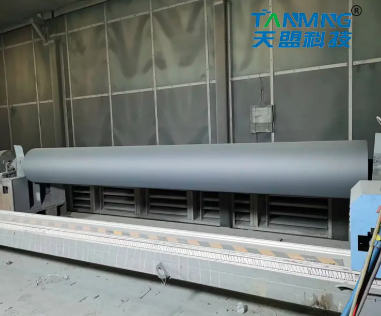
Choosing the right material for thermal spray coatings is essential to ensure durability, performance, and efficiency. The decision depends on multiple factors, including operating conditions, wear, corrosion, and functional requirements.
The first factor is the temperature range the part will face. Ceramics handle extreme heat well, metals offer moderate resistance, and abradables are limited to lower temperatures. Using a material outside its temperature tolerance can lead to cracking, delamination, or premature wear.
We also assess how much friction or particle impact the surface will experience. Hard materials such as carbides resist abrasion and erosion, while soft coatings like abradables wear preferentially. This selective wear protects more expensive or critical components.
Parts exposed to moisture, chemicals, or salt require corrosion-resistant coatings. Aluminum, zinc, and nickel alloys prevent oxidation, while ceramics provide chemical stability. In some cases, layering coatings gives both wear and corrosion protection.
Some components require heat or electricity to pass through, while others must be insulated. Metals generally conduct well, making them ideal for conductive parts, while ceramics and oxides act as excellent insulators for thermal or electrical applications.
Ceramics: Extremely hard and heat resistant, but brittle in high-stress areas.
Metals: Tough, corrosion-resistant, and conductive, though softer surfaces may wear faster.
Carbides: Ultra-hard and abrasion-resistant; some types can crack under extreme stress.
Abradables: Wear preferentially, protecting moving parts and maintaining tight tolerances.
Aerospace: Abradables, nickel alloys, and ceramics maintain tight blade clearances and withstand high temperatures.
Industrial Machinery: Carbides, molybdenum, and steel alloys protect surfaces from heavy wear and erosion.
Electrical Insulation: Ceramics and metal oxides provide both heat and electrical resistance for critical components.
| Application | Recommended Materials | Key Advantage |
|---|---|---|
| Aerospace | Abradables, Nickel Alloys, Ceramics | Tight clearances, high-temperature stability |
| Industrial Machinery | Carbides, Molybdenum, Steel Alloys | Wear resistance, long-lasting durability |
| Electrical Insulation | Ceramics, Metal Oxides | Thermal and electrical insulation |
Understanding how different thermal spray processes work helps in choosing the right material. Each process has unique characteristics that affect coating thickness, adhesion, and surface finish. Selecting the correct method ensures maximum performance.
HVOF (High-Velocity Oxygen Fuel) uses a high-speed gas jet to spray molten or semi-molten particles onto a surface. It produces dense coatings with excellent adhesion and wear resistance. HVOF is ideal for hard metals, carbides, and alloys that need to resist erosion.
Plasma Spray relies on a plasma jet to melt materials and deposit them on the target. It works well for ceramics and refractory coatings. The process can handle high melting point materials, producing thermally stable and wear-resistant layers.
Flame Spray melts powders or wires using a combustion flame. It’s a versatile, cost-effective method suitable for metals, alloys, and some cermets. Flame spray coatings are slightly more porous than HVOF or plasma but still provide solid protection.
Arc Spray uses an electric arc to melt two consumable wires. The molten material is then sprayed onto the surface using compressed air. Arc spray works best for large areas or components requiring corrosion-resistant metallic coatings.
The material’s melting point, hardness, and chemical properties dictate which process to use. Ceramics need plasma spray to reach their high melting points. Hard carbides are often paired with HVOF for dense, wear-resistant coatings. Softer metals or alloys may be applied by flame or arc spray for corrosion protection. In some cases, we layer materials using multiple processes to achieve combined properties.
Ceramics: High-temperature stability and chemical resistance, often brittle, need careful process control.
Carbides: Extremely hard and wear-resistant, dense coatings when applied with HVOF.
Metals and Alloys: Tough, conductive, corrosion-resistant, best applied with flame or arc spray.
Abradables: Soft, preferential wear, typically used in lower-temperature applications.
| Material Type | Best Spray Method | Key Performance Feature |
|---|---|---|
| Ceramics | Plasma Spray | High heat resistance, chemical stability |
| Carbides | HVOF | Dense, hard, abrasion-resistant |
| Metals & Alloys | Flame Spray, Arc Spray | Corrosion protection, toughness |
| Abradables | Flame Spray | Wear preferentially, maintain clearances |
A: The most common materials include metals, metal alloys, ceramics, carbides, and abradables. Metals and alloys provide toughness and corrosion resistance, ceramics offer high-temperature stability, carbides deliver extreme hardness, and abradables wear selectively for clearance control.
A: Yes. Ceramics and carbide coatings can withstand extreme temperatures, typically from 1,000 °C to 1,600 °C, while metals and alloys tolerate moderate heat depending on type and application.
A: Carbides are extremely hard, wear-resistant, and slightly toughened with metals, while ceramics are hard, brittle, and excel at thermal and chemical resistance. Carbides handle abrasion better, ceramics handle heat and chemical exposure better.
A: Abradables wear selectively to maintain tight clearances between moving parts, reducing mechanical stress, improving airflow, and enhancing combustion or compressor efficiency.
A: Aluminum, zinc, copper, and nickel alloys are commonly used. They prevent oxidation and corrosion, protecting steel or other metal substrates in harsh environments.
Choosing the right thermal spray coating material can dramatically extend the life of your components while enhancing efficiency and performance. From the toughness of metals and alloys to the extreme hardness of carbides, or the selective wear of abradables, each material has a purpose. Knowing how to match material to application is key for optimal results.
At Jinan Tanmng New Material Technology Co., Ltd., we specialize in precision thermal spray solutions tailored to your needs. Whether it’s aerospace, industrial machinery, or electrical applications, our team can help you select the perfect coating to protect, strengthen, and improve your equipment.


