
Views: 0 Author: Site Editor Publish Time: 2026-01-13 Origin: Site


Thermal spray coating is a versatile solution for protecting metal surfaces and improving component performance in demanding environments. From industrial machinery to aerospace applications, understanding the different types of thermal spray coating processes can help you choose the right method for wear resistance, corrosion protection, or heat management. In this guide, we’ll explore five key thermal spray coating techniques, including HVOF, flame spray, arc wire, plasma, and spray and fuse, highlighting their unique benefits, materials, and common applications to help you make informed decisions.
Thermal spraying is a surface coating technology used to protect and enhance metal components. It applies a protective layer by heating coating materials and projecting them onto a prepared surface. Once the particles hit the substrate, they flatten, cool rapidly, and form a solid coating.
Thermal spray coating processes are a group of industrial methods that deposit melted or softened materials onto a surface. They rely on heat sources such as combustion flames, electric arcs, or plasma jets. The coating bonds mechanically, not chemically, which allows use on many base materials.
Thermal spraying combines heat and motion to form strong coatings. Heat melts or softens the coating material. High-speed gas streams then accelerate the particles toward the surface. When they strike the substrate, kinetic energy helps the particles adhere and stack into layers.
Thermal spray systems use different feedstock types depending on the process and material. Each feedstock form affects coating density, speed, and cost.
| Feedstock Type | Description | Common Uses |
|---|---|---|
| Powder | Fine particles fed into heat source | Ceramics, carbides, alloys |
| Wire | Solid metal wire melted during spraying | Zinc, aluminum, steel |
| Rod | Solid rods heated and sprayed | Specialized repair coatings |
Surface preparation plays a critical role in coating performance. Before spraying, substrates are usually cleaned and roughened. Grit blasting creates surface texture so the coating can anchor properly. Poor preparation often leads to weak adhesion or early coating failure.
Thermal spray coatings can vary widely in thickness depending on the process.
Thin functional coatings: 50–150 microns
Standard industrial coatings: 150–500 microns
Heavy-duty or repair coatings: up to several millimeters
This flexibility makes thermal spraying suitable for both precision parts and large components.
HVOF thermal spray is known for producing dense, high-performance coatings. Many industries choose it when wear and corrosion resistance matter most. HVOF stands for High-Velocity Oxy-Fuel spraying. It uses a specialized spray gun to burn fuel and oxygen inside a chamber. The combustion creates a powerful gas stream. It accelerates coating particles toward the surface at extreme speeds. When particles impact the substrate, they flatten and bond tightly.
HVOF coatings stand out because of how fast particles travel. High velocity improves coating density and bond strength. It also keeps porosity very low.
| Feature | Typical Result |
|---|---|
| Particle velocity | 600–1,000 m/s |
| Coating density | Very high |
| Porosity | Less than 1–2% |
| Coating thickness | 50–500 microns |
HVOF supports a wide range of wear-resistant materials. They perform well under high stress and harsh environments.
Tungsten carbide–cobalt (WC–Co)
Chromium carbide (Cr₃C₂)
Stainless steel alloys
Nickel-based superalloys
These materials maintain hardness while resisting corrosion.
HVOF delivers excellent coating performance in many applications. We often recommend it for demanding service conditions.
Advantages
Superior wear and abrasion resistance
Strong adhesion to metal substrates
Dense coatings reduce corrosion pathways
Limitations
Limited use at extreme operating temperatures
Higher equipment and operating costs
HVOF coatings are designed to protect components that face constant friction and impact. They help extend the service life of parts across industrial machinery and aerospace applications. Common components that benefit from HVOF coatings include rolls and cylinders, shafts and journals, valves and pump components, as well as aerospace wear parts and landing gear components.
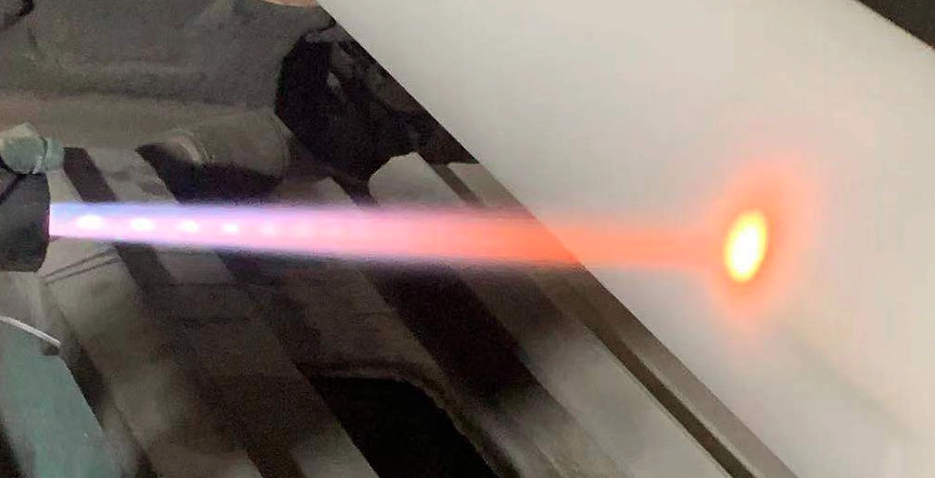
Flame spraying is one of the oldest and simplest thermal spray techniques. It’s versatile and often used for corrosion protection or surface repairs. Flame spraying melts coating material using an oxy-fuel flame. The molten particles are propelled onto the surface using compressed air.
Two main methods exist:
Flame powder spraying: Fine powder feedstock is carried into the flame, melted, and sprayed.
Wire flame spraying: Metal wire is melted in the flame, then atomized and propelled by air.
The choice between powder and wire depends on desired coating thickness, material, and surface.
Flame spray coatings are generally softer than high-velocity processes. Particle speeds are lower, usually below 100 m/s, which affects adhesion.
| Property | Typical Result |
|---|---|
| Particle velocity | <100 m/s |
| Bond strength | Moderate |
| Porosity | 5–10% |
| Coating thickness | 50–500 microns |
The structure often contains more voids and porosity than HVOF coatings. It’s still suitable for moderate wear and corrosion applications.
Flame spraying is popular for field or on-site work.
Advantages
Low cost and minimal setup requirements
Portable equipment for remote locations
Flexible process for various metals and powders
Disadvantages
Lower adhesion compared to HVOF or plasma
Coatings less durable under heavy wear or high stress
Flame spray coatings are commonly applied to surfaces exposed to moderate conditions, providing a quick way to restore worn parts or add functional layers. They are often used for corrosion protection on structural steel, improving traction or creating anti-slip surfaces, and supporting on-site maintenance or part refurbishment.
Arc wire spraying, also called electric arc spraying, is ideal for covering large areas quickly. It uses electricity to melt wire and compressed air to propel molten particles onto a surface. In this process, two conductive wires meet at the gun tip. A high-current electric arc forms between them, melting the wire tips. Compressed air then atomizes the molten metal and drives it toward the substrate. The particles flatten and solidify, forming a coating layer.
Arc wire spraying is known for speed and efficiency. It deposits coatings rapidly, making it suitable for large components. Energy from the arc is used efficiently to melt the wire, reducing waste.
| Feature | Description |
|---|---|
| Deposition rate | High |
| Energy usage | Efficient |
| Coating thickness | 100–500 microns |
| Porosity | 3–8% |
The process supports a limited but versatile range of metals.
Common feedstock includes:
Aluminum for corrosion protection
Zinc for sacrificial coatings
Steel alloys for structural reinforcement
Advantages
Fast coverage on large surfaces
Cost-effective for industrial components
Portable setups for on-site work
Drawbacks
Limited material selection
Coating density lower than HVOF or plasma
Arc wire coatings are widely used in industries that require fast and cost-effective surface protection. They are commonly applied for structural steel protection in buildings and bridges, safeguarding marine and offshore equipment, and for roll resurfacing or repairing worn components.
Plasma spraying is one of the most versatile thermal spray methods. It’s widely used when high-temperature or high-melting-point materials are required. Plasma spraying uses a plasma arc to melt coating particles. A gas, usually argon or an argon-hydrogen mix, is heated by an electric arc to create the plasma jet. The molten particles are accelerated and sprayed onto the surface.
Atmospheric Plasma Spray (APS) Overview
APS is performed in open air, making it suitable for large components. It allows spraying of metals, ceramics, and composites onto various substrates.
Plasma temperatures range from 6,000 to 15,000 °C, far above most material melting points. The high temperature enables spraying of ceramics, tungsten, molybdenum, and other hard materials. Inert gases prevent oxidation and ensure high-quality coatings.
Plasma spray can deposit a wide variety of materials depending on application needs.
Ceramics for wear and thermal resistance
Oxides for corrosion protection
Tungsten and molybdenum for extreme hardness
Thermal barrier coatings in aerospace engines
Advantages
Handles high-melting-point materials
Can coat large or complex shapes
Provides wear, corrosion, and heat resistance
Limitations
Higher cost compared to flame or arc spraying
Coatings usually have higher porosity than HVOF
Requires specialized equipment and trained operators
| Feature | Plasma Spray Result |
|---|---|
| Coating thickness | 50–500 microns |
| Porosity | 3–10% |
| Particle velocity | Moderate |
| Substrate impact | Low thermal distortion |
Plasma spraying is well-suited for high-performance and precision parts, providing advanced protection and functionality. It is commonly used for aerospace thermal barrier coatings on turbine blades, creating electrical insulation layers, and enhancing wear- and heat-resistant components in industrial machinery.
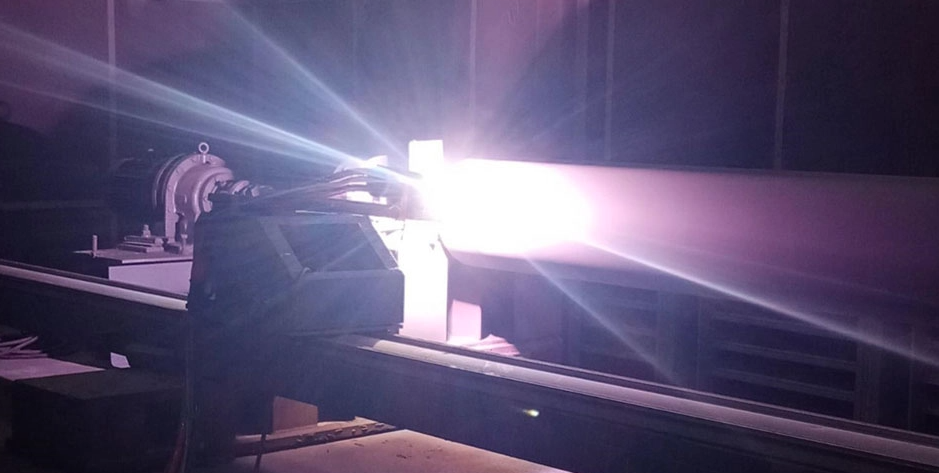
Spray and fuse combines thermal spraying with a fusion step to create very dense coatings. It’s often used when toughness and long-term durability are critical. First, the coating material is applied using a conventional spray method, like flame or plasma spraying. Then, the coating is reheated using a torch or furnace. This fuses the particles together and partially into the substrate, creating a metallurgical bond. The process fills voids and reduces porosity, producing a tough, cohesive surface layer.
Spray and fuse coatings stand out for their structural integrity.
| Characteristic | Description |
|---|---|
| Bonding type | Metallurgical |
| Porosity | Very low or near zero |
| Hardness | High |
| Thickness | 100–1000 microns |
The low-porosity structure improves wear and corrosion resistance. It’s ideal for surfaces exposed to heavy loads or abrasive conditions.
Advantages
Strong adhesion to substrate
High toughness and durability
Non-porous, dense coatings reduce wear
Limitations
Requires higher heat input, may affect sensitive substrates
More time and energy needed than conventional spraying
Spray and fuse coatings are selected for heavy-duty or precision components, offering dense and durable surface protection. They are commonly applied to industrial rolls and dies, cutting or forming tools, and other components that require wear-resistant layers.
A: Thermal spray coatings can last several years, depending on wear, environment, and maintenance.
A: They are durable but not permanent; coatings may wear or degrade over time under heavy use.
A: Yes, many thermal spray coatings can be machined, ground, or polished after application.
A: They are generally more eco-friendly than plating or painting, producing less hazardous waste.
A: Coating thickness ranges from 50 microns to several millimeters, depending on the process and application.
Thermal spray coatings offer a powerful way to boost component performance across industries, from aerospace to heavy machinery. By selecting the right process—HVOF, flame, arc wire, plasma, or spray and fuse—you can achieve tailored wear, corrosion, or heat resistance exactly where it’s needed.
At Jinan Tanmng New Material Technology Co., Ltd., we provide expert guidance and advanced thermal spray solutions to help you extend part life, reduce maintenance, and enhance efficiency. Explore our services to find the perfect coating strategy for your applications today!


