
Views: 0 Author: Site Editor Publish Time: 2026-01-13 Origin: Site


Ceramic Thermal Spray Coatings have revolutionized modern manufacturing, offering superior wear resistance, high-temperature protection, and corrosion resistance for critical components. From aerospace to industrial machinery, these coatings extend the life of parts, enhance performance, and improve reliability.
In this article, we’ll explore the three most common types of Ceramic Thermal Spray Coatings—Chrome Oxide, Aluminum Oxide, and Titanium Dioxide—and discuss their properties, applications, and advantages in industrial settings.
Ceramic Thermal Spray Coatings involve projecting molten or semi-molten ceramic material onto a surface to form a protective layer. This process creates highly adherent, durable coatings that can withstand high temperatures, chemical exposure, and abrasive wear.
The most common thermal spray methods for ceramics include:
Plasma Spray Ceramic Coating: Ideal for high-melting-point ceramics.
High Velocity Oxygen Fuel (HVOF): Creates dense, low-porosity coatings.
Detonation Gun (D-Gun) Coating: Produces extremely hard, wear-resistant coatings.
Suspension Plasma Spray (SPS): Allows nanostructured coatings with enhanced thermal insulation.
Each method affects the coating’s adhesion, density, surface roughness, and durability, making the choice of process critical.
Industries rely on ceramic coatings for their robust mechanical, thermal, and chemical properties. Benefits include:
High wear and abrasion resistance for moving parts.
Thermal barrier properties to protect components in extreme heat.
Chemical and corrosion resistance in aggressive environments.
Electrical insulation for sensitive electronic components.
Compared to metallic thermal spray coatings, ceramics provide higher hardness, lower friction, and superior thermal and chemical stability, making them ideal for critical industrial applications.
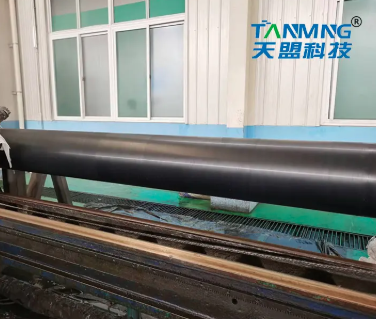
Chrome Oxide Ceramic Thermal Spray Coating is widely used for applications requiring maximum wear resistance and chemical stability. It has a hardness of 62–70 HRC and provides excellent resistance to abrasion and corrosion, especially in moderate chemical environments. Chrome oxide coatings can withstand temperatures up to 1000°F, with thicknesses typically ranging from 0.003” to 0.025”. With proper grinding or superfinishing, surface finishes of 8 Ra-in or smoother are achievable.
Chrome oxide coatings are commonly applied in industries where wear and corrosion protection is critical, including:
Sealing surfaces in pumps
Textile rollers and machinery
Food processing equipment
This coating offers the highest wear resistance among common ceramic coatings and an excellent balance of hardness and smoothness, making it ideal for heavy-duty industrial applications. However, Chrome Oxide coatings are more expensive than other ceramic options, which may be a consideration for budget-sensitive projects.
Alumina Thermal Spray Coating is known for its dielectric properties, heat resistance, and low friction. It can tolerate temperatures up to 3000°F and has a dielectric strength of 300–400 volts per 0.001” thickness at room temperature. Typical coating thickness ranges from 0.005” to 0.020”, and surface roughness is usually around 20 Ra-in. Alumina is also chemically resistant to alkali solutions such as lye, ammonia, and non-phosphate detergents.
Alumina coatings are suitable for components that require thermal or electrical insulation combined with moderate wear resistance, such as:
Motor housings and electrical components
Pump seals and liners
Non-conductive industrial rollers
Alumina coatings provide excellent thermal and electrical insulation, along with strong wear resistance and a low coefficient of friction. The limitations are that the surface finish is rougher than Chrome Oxide, and the material is considered premium, which may increase overall project costs.
Titanium Dioxide Ceramic Coating is a cost-effective option for moderate wear applications. It has a hardness of 50–53 HRC and can withstand temperatures up to 1000°F. TiO₂ coatings resist corrosion in many environments but are vulnerable to strong alkalis and sulfuric acid. Typical thickness ranges from 0.005” to 0.025”, and surface finishes as smooth as 8 Ra-in are achievable.
TiO₂ coatings are widely used where sliding wear protection and cost-efficiency are priorities, including:
Sliding wear components
Abrasive wear protection
Budget-conscious industrial machinery
Titanium Dioxide coatings offer a smooth surface finish at a lower cost, balancing performance in moderate wear and corrosion scenarios. However, they have lower hardness compared to Chrome Oxide or Alumina and are not suitable for extreme wear conditions, limiting their use to moderate-duty applications.
When selecting a coating, consider:
Operational temperature of the component
Wear and abrasion conditions (sliding, impact, or abrasive environments)
Chemical or corrosive exposure
Electrical insulation needs
Surface finish and smoothness requirements
Budget constraints
| Coating | Hardness (HRC) | Max Temp | Surface Finish (Ra-in) | Key Strength | Typical Applications |
|---|---|---|---|---|---|
| Chrome Oxide | 62–70 | 1000°F | 8 | Maximum wear resistance | Pumps, textile rolls, food equipment |
| Aluminum Oxide | 60–66 | 3000°F | 20 | Dielectric & thermal barrier | Motor housings, non-conductive rollers |
| Titanium Dioxide | 50–53 | 1000°F | 8 | Moderate wear & cost-effective | Sliding components, abrasive wear |
This comparison helps manufacturers select coatings based on performance, operational environment, and cost-effectiveness.
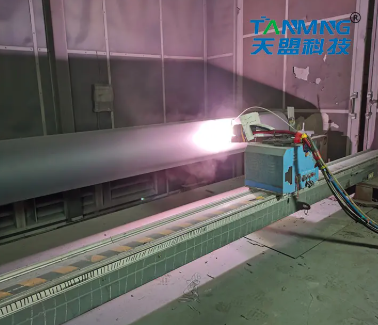
While all three coatings can be applied using thermal spray methods, plasma spray is the most widely used for ceramics due to its ability to reach extremely high temperatures. Other methods include:
HVOF (High Velocity Oxygen Fuel): Produces dense coatings with low porosity
Detonation Gun (D-Gun): Creates extremely hard, durable coatings
Suspension Plasma Spray (SPS): Enables nanostructured coatings with improved thermal insulation
Choosing the right application method is critical to achieving optimal adhesion, surface finish, and durability.
A: Chrome Oxide (Cr₂O₃) Ceramic Thermal Spray Coating is the most wear-resistant, offering the highest hardness (62–70 HRC) and excellent resistance to abrasion and corrosion, ideal for heavy-duty industrial applications.
A: Yes, Aluminum Oxide (Al₂O₃ / Alumina) coatings can withstand temperatures up to 3000°F, making them suitable for high-temperature and dielectric applications.
A: Yes, Titanium Dioxide (TiO₂) Ceramic Coating is cost-effective, providing moderate wear and corrosion resistance, suitable for budget-conscious industrial machinery.
A: Plasma Spray is the most widely used for ceramics due to its ability to reach extremely high temperatures and apply high-melting-point coatings effectively.
Choosing the right ceramic thermal spray coating can dramatically improve your equipment’s performance and lifespan. Whether you need maximum wear resistance, high-temperature protection, or cost-effective solutions, understanding the differences between Chrome Oxide, Alumina, and Titanium Dioxide coatings helps you make smarter decisions for your applications.
At Jinan Tanmng New Material Technology Co., Ltd., we provide expert guidance and high-quality coatings tailored to your industrial needs. Explore our solutions and see how the right ceramic coating can boost efficiency, reduce maintenance, and protect your investment.


