
 |
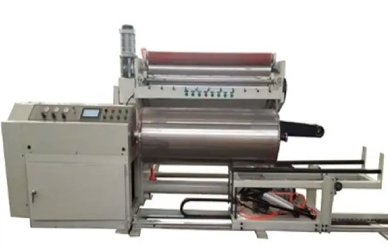


The ZWQ Series High-Speed Automatic Paper Slitting Winding Machine represents the pinnacle of narrow-web converting technology. Engineered for facilities where precision is not just a requirement but a competitive necessity, this system transforms jumbo rolls into perfectly tensioned, cleanly slit narrow strips. Whether you are processing delicate cigarette paper, technical filter media, or heavy-duty cable paper, the ZWQ delivers a level of edge quality and winding consistency that traditional machines simply cannot match. By integrating advanced automation with a heavy-duty physical foundation, we provide a solution that minimizes material waste and maximizes operational uptime.
Specialized Capability: Engineered specifically for ultra-narrow slitting down to 10mm.
Material Versatility: Compatible with cable paper, filter paper, cigarette paper, yarn tube paper, and non-woven fabrics.
Structural Excellence: Built on a paired, high-precision cast-iron frame for vibration-free high-speed operation.
Automation Suite: Features automatic web-guiding (correction) and automatic feeding systems.
Winding Precision: Utilizes dual pneumatic expansion shafts (air shafts) for superior roll density control.
| Quantity: | |
|---|---|
Step into a production environment where the erratic noise of vibrating machinery is replaced by the smooth, rhythmic hum of synchronized precision. As you watch the ZWQ High-Speed Automatic Paper Slitting Winding Machine in action, you’ll notice the absolute stillness of the heavy-duty cast-iron frame, even as the blades whisper through material at high velocities. The machine possesses a reassuringly solid presence in the workshop; its surfaces are finely machined, and the pneumatic shafts engage with a crisp, airtight "hiss" that signals a secure grip on your valuable inventory.
Every roll produced by the ZWQ tells a story of craftsmanship. Run your fingers across the edge of a finished 10mm strip—you won't find the frayed fibers or jagged micros-tears common in lower-tier equipment. Instead, you’ll feel a glassy smoothness that ensures the paper will perform flawlessly in its next stage of manufacturing. This machine was born from the need to eliminate the "headaches" of the converting floor: the constant adjustments, the ruined rolls due to poor tracking, and the slow changeover times. We’ve replaced frustration with a tactile sense of control, giving your operators a tool that responds with surgical accuracy to the demands of specialty paper production.
The ZWQ Series is defined by its ability to handle the "difficult" jobs with ease. By focusing on the mechanical harmony between the unwinding tension and the slitting speed, we have achieved a system that offers several standout advantages:
The 10mm Narrow-Web Edge: While most industrial slitters struggle with stability at widths below 50mm, our ZWQ series is optimized for the micro-market. The knife-locking mechanism is designed to prevent even a fraction of a millimeter of lateral drift.
Resonant-Damping Frame: Our cast-iron frames are processed in identical pairs. This ensures that the left and right sides of the machine are perfectly symmetrical, preventing the internal stresses that cause "walking" or misalignment over years of use.
Intelligent Web Path Correction: The integrated sensor array "sees" the edge of the material long before it reaches the knives. It makes micro-adjustments to the unwind stand, ensuring that even rolls with uneven edges are converted into perfectly straight finished products.
Ergonomic Pneumatic Loading: The use of air shafts means your team spends less time wrestling with manual chucks and more time overseeing production. The inflation and deflation process is instantaneous, securing the core with uniform pressure from the inside out.

In the specialized paper industry, tension is the invisible force that determines success or failure. Too much tension, and delicate cigarette or filter paper will stretch or snap; too little, and the finished roll will "telescope" during transport. The ZWQ Series utilizes a sophisticated tension-sensing architecture that treats every material with the sensitivity it requires. The machine calculates the diameter of the winding roll in real-time, adjusting the torque of the pneumatic shafts to maintain a constant "feel" throughout the entire process.
This precision extends to the slitting array itself. Our multi-knife setup is not just about quantity; it’s about the quality of the shear. Each knife is manufactured from high-hardness alloy steel, maintaining a razor-sharp edge through millions of meters of cut. The interaction between the blade and the material is designed to be a clean "parting" rather than a "tearing" motion. This level of technical detail ensures that the dust generated during slitting—a major issue in filter paper production—is reduced to the absolute minimum, keeping your facility cleaner and your product quality higher.
The longevity of a slitting machine is determined by what you don't see: the quality of the casting and the precision of the bearings. We utilize a "monoblock" philosophy for our cast-iron frames. These frames undergo a rigorous heat-treatment process to relieve internal stresses, preventing warping over decades of operation. Because the frames are machined in pairs, the bearing seats are perfectly aligned, which drastically reduces the heat and friction that lead to premature component failure.
This heavy-duty construction isn't just about durability; it’s about the finished product. A lighter frame made of welded steel will vibrate at high speeds, and those vibrations are transferred directly to the slitting knife, resulting in a "wavy" edge. By using high-mass cast iron, we absorb those vibrations at the source. When you stand next to the ZWQ at full speed, the floor beneath you remains still. This architectural stability is why the ZWQ is the preferred choice for technical papers where the margin for error is non-existent.
Investing in Tanmng technology means choosing a partner that understands the nuances of material science and mechanical engineering. We don't just provide a machine; we provide a foundation for your production excellence.
Decades of Specialized Expertise: Our engineering team has focused specifically on the challenges of narrow-web and specialty paper converting, allowing us to anticipate problems before they occur.
Bespoke Configuration: We recognize that no two production lines are identical. We offer customizable knife configurations and shaft sizes to match your specific product portfolio.
Rigorous Factory Acceptance Testing: Before any ZWQ machine leaves our floor, it undergoes a battery of tests using materials similar to yours to ensure it meets our strict accuracy and speed benchmarks.
Sustainable Performance: By reducing material waste and energy consumption through high-efficiency motors and precise tension control, we help your facility meet modern sustainability goals while increasing profitability.
Q: Can this machine handle non-woven fabrics for medical or industrial use?
A: Absolutely. The ZWQ series is highly effective for non-woven materials. The tension control system is adjustable to ensure that the fibrous structure of non-wovens is not distorted during the slitting and winding process.
Q: How does the automatic correction system handle poorly wound jumbo rolls?
A: The system uses high-frequency sensors to detect the edge position. It then moves the entire unwind carriage laterally to compensate for any irregularities in the jumbo roll, ensuring the material enters the knives perfectly straight.
Q: What maintenance is required for the pneumatic expansion shafts?
A: Maintenance is minimal. We recommend a weekly check of the air valves and a monthly inspection of the expansion lugs. Because we use high-grade synthetic rubber for the bladders, they are designed to last for several years of heavy use.
Q: Is it possible to add more knives for even narrower slitting?
A: The machine comes with a multi-knife array, and additional knife holders can be added to the rail system depending on your specific width requirements and the physical space available on the shaft.


