
Views: 0 Author: Site Editor Publish Time: 2026-06-14 Origin: Site


Industrial operations face a critical transition today. Companies are rapidly moving away from traditional surface treatments like hard chrome plating. Strict environmental regulations enforce this industry-wide shift. Modern markets also demand much longer component lifecycles. Engineers frequently witness the premature failure of high-value structural components. Severe abrasion, erosion, and sliding wear destroy these critical parts daily. Rapid equipment degradation causes costly downtime and frequent replacements.
You can effectively solve this problem using a tungsten carbide coating. This advanced technology delivers the extreme hardness of solid carbide directly to your substrate surface. It achieves an impressive 2000–2700 HV hardness without altering the underlying base metal's structural integrity.
This article provides a comprehensive technical evaluation framework. Engineering and procurement teams will learn exactly when to specify these protective layers. You will discover which application processes maximize performance. We will also explore practical ways to navigate inherent material limitations. Properly applied, this surface defense strategy drastically extends equipment life.
Tungsten carbide coatings form a mechanical bond at temperatures typically below 300°F, eliminating the risk of substrate distortion.
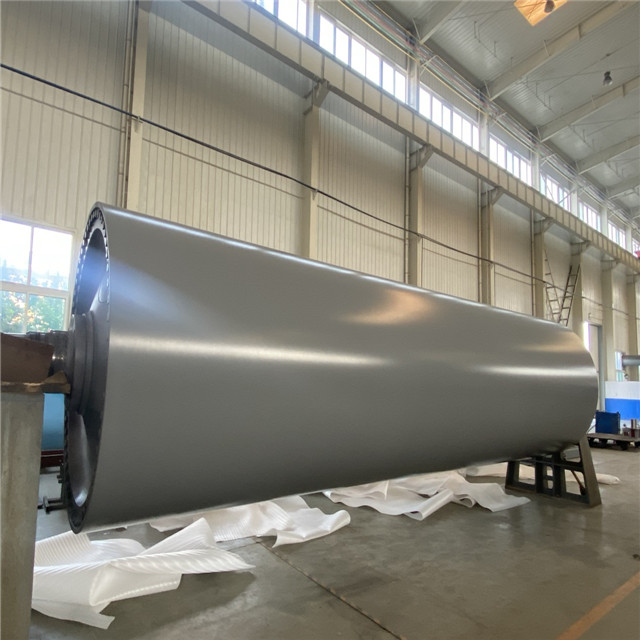
For large-scale components (like an Industry Roller or pump housing), coatings are highly cost-effective compared to solid carbide manufacturing.
Binder selection is critical: use Cobalt for pure wear, NiCoCr for corrosive environments, and pivot to Chromium Carbide if service temperatures exceed 500°C.
HVOF (High Velocity Oxy-Fuel) is the industry standard for this material, offering >99% density and exceptional bond strength.
Implementation requires accounting for line-of-sight application limits and the Coefficient of Thermal Expansion (CTE) mismatch between the coating and base metal.
Engineers must evaluate the appropriate surface defense strategy carefully. You should base this decision on load, component geometry, and project budget. Each approach serves a specific engineering purpose. We break down the technical differences below to guide your specification process.
Solid carbide parts offer massive compressive strength. Manufacturers use them for small, highly engineered tools. Cutting inserts, wire drawing dies, and extreme-pressure nozzles rely on solid carbide.
Best for: Small parts requiring full-depth wear resistance or handling immense compressive loads.
Drawbacks: Solid carbide is extremely brittle. It shatters under heavy tensile stress. Producing large-scale industrial components from solid carbide remains cost-prohibitive.
Thermal spraying provides a versatile compromise. It applies a thin, ultra-hard layer precisely where you need it.
Best for: Extending the life of massive components where only surface-level defense is required. Common examples include large gate valves, pump shafts, and extrusion screws.
Mechanism: The process creates a low-temperature mechanical bond. Substrate temperatures rarely exceed 300°F. This low heat maintains precise dimensional tolerances. It completely avoids altering base metal metallurgy or causing thermal warping.
Hardfacing involves welding thick protective layers onto a substrate. It excels in brutal environments.
Best for: Extreme impact and deep gouging environments. Mining crushers and heavy earth-moving buckets use hardfacing extensively.
Mechanism: Hardfacing creates a high-temperature metallurgical bond. The overlay material dilutes directly into the base metal. It yields a much thicker layer ranging from 2 to 10 millimeters. However, it lacks the dimensional precision of thermal spray.
Specification Feature | Solid Tungsten Carbide | Tungsten Carbide Coating (HVOF) | Hardfacing (Weld Overlay) |
|---|---|---|---|
Bond Type | N/A (Bulk Material) | Mechanical (<300°F) | Metallurgical (Melting Temp) |
Impact Resistance | Low (Brittle) | Moderate | Very High |
Dimensional Precision | Extremely High | High (Requires minimal grinding) | Low (Requires heavy machining) |
Typical Thickness | Full Component Depth | 125 – 250 microns | 2,000 – 10,000 microns |
Tungsten carbide particles cannot stand alone. They are brittle ceramic compounds. Manufacturers must suspend these hard particles in a metallic binder. This matrix absorbs impacts and holds the coating together. Selecting the right matrix prevents premature failure in the field.
Many industrial machines operate in dry, non-corrosive environments. Dust, sand, and friction cause the primary damage.
Composition: Tungsten Carbide combined with Cobalt (WC-Co).
Outcome: This formulation provides maximum hardness. It delivers exceptional wear resistance against dry sliding friction. However, cobalt degrades quickly when exposed to harsh chemicals.
Offshore drilling rigs and chemical processing plants face dual threats. Components suffer both mechanical wear and aggressive chemical attacks.
Composition: Tungsten Carbide paired with Nickel Cobalt Chromium (WC-NiCoCr) or Cobalt Chromium Nickel (WC-CoCrNi).
Outcome: Adding chromium and nickel drastically improves corrosion resistance. This matrix prevents the binder from oxidizing. It stops saltwater or acidic fluids from dissolving the metallic matrix.
Thermal environments dictate strict material constraints. Engineers must monitor operating temperatures closely.
Constraint: Standard tungsten carbide begins to oxidize rapidly at high temperatures. In oxygen-rich environments, degradation starts around 500°C to 600°C. The material softens and loses its wear-resistant properties.
Alternative: You must pivot to Chromium Carbide (Cr3C2) blends for elevated temperature service. Chromium carbide paired with a Nickel Chromium binder performs reliably up to 850°C.
Many procurement teams default to standard WC-Co for every application. They ignore the operating environment chemistry. Using standard cobalt binders in marine environments leads to rapid galvanic corrosion. The binder dissolves, leaving the carbide particles unsupported. The coating then spalls off in large flakes. Always match the binder chemistry to your specific fluid exposure.
Applying the material correctly matters just as much as formulation. You must assess how the material hits the substrate. Application methodology directly determines coating density, porosity, and field performance.
HVOF stands as the undeniable industry standard for applying hard carbides. It uses kinetic energy rather than extreme thermal energy to build the coating.
Mechanism: The system combusts oxygen and fuel gas inside a high-pressure chamber. This combustion propels semi-melted powder particles through a nozzle at supersonic speeds. The particles strike the substrate with immense force.
Outcomes: HVOF produces ultra-dense coatings exceeding 99% density. It leaves minimal porosity. The high impact velocity creates compressive residual stress within the layer. This compressive stress prevents cracking and allows for thicker protective buildups than standard plasma spraying.
Combustion: Oxygen and fuel mix and ignite under high pressure.
Acceleration: Gas expansion accelerates powder particles to speeds surpassing Mach 2.
Heating: Particles soften just enough to deform upon impact, without fully melting.
Impact: Particles flatten into thin splats, interlocking mechanically with the substrate.
The D-Gun process offers an alternative high-kinetic methodology. It shares similarities with HVOF but operates using distinct physics.
Mechanism: The D-Gun uses controlled gas explosions inside a long, water-cooled barrel. It fires particles in distinct pulses at extreme velocities.
Outcomes: This process yields exceptionally high bond strengths. It produces some of the densest coatings available. Aerospace manufacturers and high-tier valve producers frequently specify D-Gun applications for critical components.
Deploying these technologies reliably requires highly capable partners. You must source vendors capable of engineering precise Thermal Spray Customized Products. Proper execution requires strict control over powder particle size. Premium HVOF coatings demand tight powder distributions, often isolated to a 30-50 micron range. Poor particle sizing leads to clogged nozzles, high porosity, and catastrophic field failures.
Industrial sectors are actively phasing out legacy surface treatments. Hard chrome plating dominated the market for decades. Today, thermal spray solutions offer a superior alternative. Comparing these incumbent technologies reveals clear operational advantages.
HVOF tungsten carbide consistently equals or exceeds hard chrome performance. It offers superior resistance to severe erosion and sliding abrasion. While hard chrome provides roughly 850 to 1000 HV hardness, thermal spray carbides easily push past 1200 HV in their sprayed matrix. This increased hardness directly translates to longer intervals between maintenance cycles.
Chrome plating processes expose workers to hexavalent chromium (Cr6+). This substance is highly toxic and fiercely regulated. Global agencies enforce tightening EPA and REACH environmental standards. Transitioning to thermal spray eliminates this toxic exposure. It future-proofs your operations against impending chemical bans and reduces hazardous waste disposal fees.
Thermal spraying delivers much faster application turnaround times. Hard chrome plating requires lengthy chemical bath immersions lasting several days. HVOF completes the same coverage in hours. Furthermore, modern spray equipment produces excellent "as-sprayed" surface finishes. You can sometimes bypass secondary machining entirely. Conversely, chrome plating almost always requires extensive post-grinding to achieve dimensional tolerance.
Performance Metric | Hard Chrome Plating | HVOF Tungsten Carbide |
|---|---|---|
Typical Hardness | 850 – 1000 HV | 1100 – 1400 HV (Matrix) |
Environmental Impact | High (Toxic Cr6+ baths) | Low (No toxic liquid waste) |
Application Speed | Slow (Days in chemical baths) | Fast (Hours via thermal spray) |
Abrasion Resistance | Moderate to High | Extremely High |
Engineers must acknowledge objective realities during the design phase. No surface treatment is perfect. You must account for specific physical limitations before specifying thermal spray solutions. Ignoring these risks leads to expensive manufacturing failures.
HVOF and similar thermal sprays operate strictly on a line-of-sight basis. The spray gun must aim directly at the target surface. Operators typically maintain an 8-inch standoff distance for optimal particle impact.
The Challenge: It remains exceedingly difficult to coat complex inner diameters (IDs). Deep bores and narrow internal geometries block the spray stream.
The Solution: You must redesign parts to allow external coating whenever possible. If internal coating is mandatory, consult specialists about specialized ID spray extensions, though these still carry depth limitations.
Thermal physics dictate how materials behave under heat. Tungsten carbide has a Coefficient of Thermal Expansion (CTE) roughly one-third to one-half that of steel. They expand and contract at vastly different rates.
The Risk: Rapid thermal cycling induces severe stress directly at the bond line. The steel expands quickly, while the rigid carbide layer resists. This mismatch leads to micro-cracking, delamination, or catastrophic spalling.
The Solution: Engineers mitigate this by applying thin transitional metallic bond coats. You must also implement precise operational controls to avoid sudden temperature shocks during equipment startup.
Achieving extreme hardness creates downstream manufacturing challenges. Because the surface hits 2000+ HV locally, you cannot use standard aluminum oxide or silicon carbide abrasives.
The Hurdle: Post-coat grinding requires specialized diamond or Cubic Boron Nitride (CBN) tooling. These tools cost significantly more than standard grinding wheels.
The Impact: This requirement impacts maintenance budgets and turnaround times. You must factor specialized grinding costs into your initial project planning.
Tungsten carbide coatings offer a high-yield engineering compromise. They bridge the gap between the extreme durability of solid carbide and the structural versatility of standard steel. By applying specialized powder through supersonic thermal spray, manufacturers drastically extend the lifespan of critical industrial assets.
Success ultimately dictates matching the precise binder formulation to your operating environment. You must account for operating temperatures, corrosive fluids, and abrasive loads. Utilizing an HVOF process ensures maximum density and bond strength. However, you must carefully navigate line-of-sight limitations and thermal expansion mismatches during the design phase.
We recommend conducting a thorough wear analysis on your currently failing components. Identify the exact failure modes driving your downtime. Next, consult directly with a certified thermal spray specialist. They will help you determine if your component geometry permits a reliable line-of-sight application. Adopting this technology proactively secures better operational reliability and regulatory compliance.
A: Most industrial applications range from 0.005 to 0.010 inches (125–250 microns). However, utilizing the unique compressive stresses generated by the HVOF process, localized buildups can technically reach up to 0.5 inches. This extreme thickness depends heavily on component geometry and base material properties.
A: No. High-velocity processes like HVOF maintain base material temperatures well below 300°F (150°C). This low heat transfer results in a purely mechanical bond. It completely avoids metallurgical changes, stress relieving, or thermal warping in your precision components.
A: Yes. Operators can chemically strip or mechanically grind off worn coatings. Once the old layer is removed, technicians inspect the base component and re-spray it. This targeted refurbishment process drastically extends the overall lifecycle of expensive capital equipment.