
Views: 0 Author: Site Editor Publish Time: 2026-06-14 Origin: Site


Advanced coating materials often steal the spotlight during engineering reviews. Yet, industry data reveals a hidden risk. Over 60% of premature coating delaminations trace back to inadequate surface preparation. This staggering failure rate demands immediate attention.
The thermal spray process relies primarily on a mechanical interlocking bond. It rarely achieves true metallurgical fusion. The substrate must provide precise "splat-hold" or anchor teeth. You must achieve this profile without introducing contamination or excessive residual stress.
This article provides a high-level, decision-focused guide. You will learn how to establish strict preparation protocols. We will help you select the right media and define QA standards. Use this guide when evaluating vendors or planning in-house coating operations.
Bonding Mechanics: Thermal spray relies on mechanical interlocking; true adhesion requires both a chemically clean surface and a specifically engineered topographical profile (peaks and valleys).
Process Sensitivity: High-kinetic processes (like HVOF or Cold Spray) require significantly lower surface roughness (Ra) than low-kinetic processes (like Flame or Arc spraying).
The Time Window: Cleaned and blasted surfaces must be coated within 4 to 6 hours to prevent oxidation and moisture degradation.
Quality Assurance: Adhesion standards (like ASTM C633) and strict limits on grit entrapment (<20%) are non-negotiable for critical wear and corrosion applications.
You cannot treat thermal spraying like standard welding. Welding melts the substrate and the filler metal together. Thermal spraying relies entirely on a mechanical bond. Molten or semi-molten particles strike the surface and flatten out. They must interlock physically into the microscopic hills and valleys. You cannot just clean the rust off the metal. You must actively "cut" the substrate to create under-cut pits.
Poor surface preparation has a massive cost of failure. It initiates a cascading series of defects. First, microscopic contaminants prevent individual splats from bonding. This weakness leads to coating spallation under thermal cycling. Later, compromised interfaces allow moisture to penetrate. Localized corrosion then destroys the component from the inside out. In aerospace or heavy industry, this causes catastrophic engine or structural damage.
You should use stringent surface preparation as a vendor evaluation lens. It acts as the primary differentiator between commodity spray shops and reliable engineering partners. A trusted partner consistently delivers high-quality Thermal Spray Customized Products. They never cut corners during the substrate activation phase.
You must absolutely remove all surface contamination before blasting begins. Oils, grease, and hydrocarbons pose a severe threat. If you skip this step, the high-pressure grit will drive these contaminants deep into the substrate profile. They become trapped beneath the newly formed anchor teeth. When the hot spray particles hit the surface later, these trapped oils vaporize. The expanding gas instantly destroys the mechanical bond.
Industrial facilities utilize several verifiable methods for substrate decontamination. You cannot rely on simple wiping alone. We recommend the following acceptable cleaning methods:
Vapor Degreasing: This method suspends parts in hot solvent vapors. It dissolves heavy grease evenly across complex geometries.
Thermal Bake-out: Highly porous parts require heat. Baking them burns off deeply absorbed fluids and carbon residues.
Localized Solvent Wiping: You can use lint-free cloths and approved solvents for very large components. Technicians must frequently change the cloths to avoid smearing oils.
After successful decontamination and masking, the clock starts ticking. We call this the 4-to-6 hour execution rule. Emphasize this critical compliance window with your team. Once a surface is mechanically activated, you must commence coating application within 4 to 6 hours. Delaying the process invites flash rust. It also allows the exposed metal to absorb atmospheric moisture. Even microscopic moisture drastically reduces the final bond strength. If you miss this window, you must blast the component again.
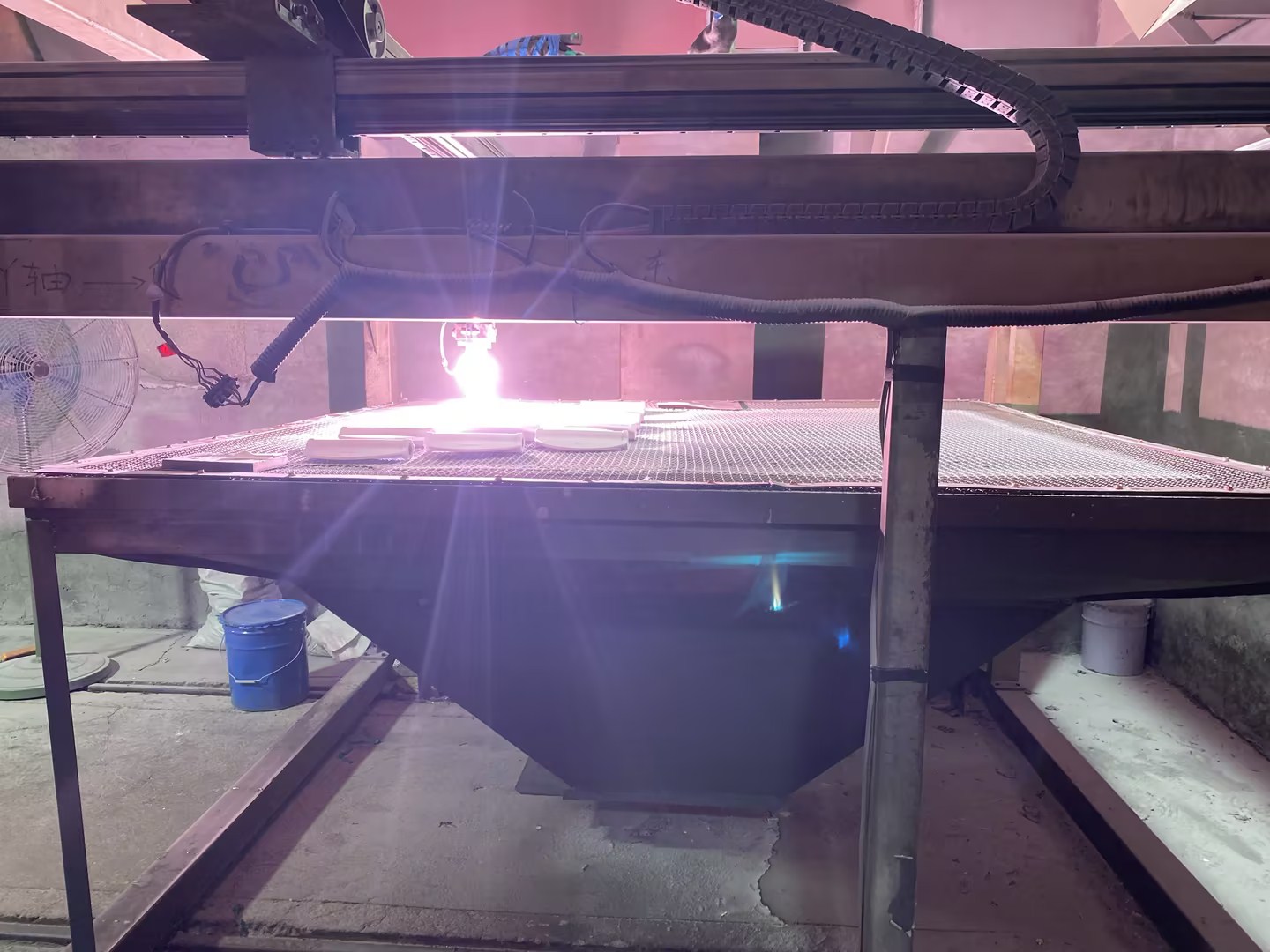
Choosing the correct blast media represents a critical engineering decision. The "white" versus "cheap" debate dominates many shop floors. We strongly recommend fused aluminum oxide. You should use either 99% white alumina or 3% titania brown alumina. These materials fracture upon impact, exposing new sharp edges. They maintain an angular shape. They are also chemically inert, preventing galvanic reactions.
White alumina offers a distinct, practical field advantage. It turns gray when it becomes contaminated with metal debris. This color change provides operators an immediate visual cue for media replacement. Do not ignore this signal. Warn your team against cheap steel grit. Steel grit often leaves corrosive residues behind. When these residues enter aqueous environments, the coating fails. Soft media like walnut shells or corn cobs are equally dangerous. They clean the surface but fail to create the necessary anchor tooth profile.
You must tailor the final roughness to your specific application. Different spray velocities require vastly different profiles. Review the comparison chart below for guidance.
Comparison Chart: Process Roughness Requirements | |||
Spray Process | Kinetic Energy | Target Roughness (Ra) | Process Considerations |
|---|---|---|---|
Flame / Arc Spray | Low | 15 – 75 µm | Requires deep under-cuts to compensate for slow particle velocity. |
Plasma (APS) | Medium | 5 – 10 µm | Offers moderate tolerance; plasma plume provides slight cleaning effect. |
HVOF | High | 3 – 8 µm | Excessive roughness creates shadowing and voids during high-velocity impact. |
Cold Spray | Very High | 1 – 5 µm | Over-blasting negatively impacts adhesion; requires pristine micro-profiles. |
Parameter optimization requires precise data. Proper surface preparation for thermal spraying relies on Statistical Design of Experiments (SDE). You cannot rely on operator guesswork. Facilities must control variables like standoff distance, air pressure, and nozzle angle. The nozzle angle should remain slightly less than 90 degrees. A strict 90-degree angle drives grit directly into the substrate, causing entrapment instead of cutting.
Grit entrapment acts as a silent killer in the coating industry. Embedded blast media forms a weak boundary layer between the metal and the new coating. When thermal cycling occurs, these foreign particles expand at different rates. The coating inevitably shears off. High-end aerospace and industrial standards strictly regulate this defect. They cap cross-sectional media contamination at a maximum of 20%.
Aggressive blasting also induces compressive residual stress. It causes physical deformation across the substrate surface. We quantify this stress using Almen strips. Almen testing measures the curvature of a standard metal strip after blasting. You must distinguish grit blasting's cutting action from shot peening. Shot peening uses round media to relieve stress. Grit blasting uses sharp media to cut under-cuts. You must balance the cutting action without warping thin-walled components.
Soft substrates require special attention. Soft metals like aluminum and copper are highly susceptible to severe grit embedment. Standard blast pressures will drive the sharp alumina deep into the soft matrix. You must modify your parameters. Reduce the air pressure, increase the standoff distance, or evaluate alternative preparation methods entirely.
Standard blasting sometimes fails to meet operational constraints. Environmental regulations, severe noise limitations, or ultra-sensitive substrates often prohibit grit blasting. Engineers must evaluate alternative technologies when working with titanium, ceramics, or active plant environments. Dust clouds pose a severe safety hazard in confined spaces.
Rotary bristle blasting offers a viable, compressor-free alternative. It works exceptionally well for field repairs. Operators use it frequently on wind turbines or offshore oil platforms. The spinning bristles strike the surface, creating an anchor profile without loose media. Studies prove it achieves up to 60% of the adhesive strength of conventional grit blasting. This makes it an excellent choice for on-site maintenance.
Next-generation applications require even cleaner methods. Laser cleaning and high-pressure water jetting provide zero-entrapment activation. Laser ablation vaporizes contaminants without leaving any physical residue behind. High-pressure water jetting strips old coatings and roughens the surface using pure kinetic energy. These advanced methods are increasingly popular for highly specialized jobs.
Quality assurance begins with visual and tactile baselines. A properly blasted surface has very specific characteristics. It should display a "white metal finish." It must exhibit a matte, non-reflective appearance. As you move a light across the component, the surface should "twinkle" due to the sharp peaks and valleys. When touched with a gloved hand, it should feel similar to 80-100 mesh sandpaper.
You must demand strict testing and compliance from your vendors. Require them to adhere to standard surface preparation protocols, such as the AWS/SSPC guidelines. Visual checks are great, but quantifiable data prevents failures.
Quality Assurance Testing Metrics | ||
Test Category | Standard / Method | Acceptance Criteria |
|---|---|---|
Adhesion Strength | ASTM C633 Pull-Off Test | >5,000 psi (34-69 MPa) depending on coating system. |
Media Entrapment | Cross-Sectional Microscopy | Less than 20% surface area contamination. |
Surface Cleanliness | AWS / SSPC-SP 5 | White Metal Blast Cleaning (No visible residues). |
Time Sensitivity | Process Control Log | Coating applied within 4 to 6 hours of blasting. |
Ensure your process guarantees compliance with final pull-off adhesion tests. The ASTM C633 standard remains the gold standard in our industry. Depending on your coating system, you should expect values exceeding 5,000 psi. Meeting these metrics ensures your coating will survive long-term industrial abuse.
Surface preparation stands as the structural foundation of the entire coating process. A flawless, high-tech coating over poorly prepared steel is guaranteed to fail. You must respect the mechanical bonding principles. Focus on rigorous cleaning, optimal grit selection, and strict timeframe adherence.
Take actionable steps immediately. Encourage your engineers and procurement teams to audit vendor facilities. Check their media replacement schedules. Verify their environmental controls, tracking both humidity and time limits. Demand SDE-based parameter documentation. Do these checks before committing to any coating provider to guarantee long-term component reliability.
A: No. Standard sand lacks the angularity needed to cut proper under-cuts into the substrate. It merely cleans rather than roughens. Additionally, sand poses severe silica dust health hazards. You must use fused alumina or chilled iron to achieve the correct anchor tooth profile.
A: You must apply the coating within 4 to 6 hours. This timeframe assumes a climate-controlled environment. Delaying the application allows microscopic flash rust and surface oxidation to form. Moisture absorption will severely compromise the mechanical bond strength.
A: HVOF utilizes extremely high kinetic energy. This allows the spray particles to aggressively deform and bond tightly to micro-profiles. If the macro-roughness is too deep, the high-velocity impact creates shadowing. The particles fail to fill deep valleys, leading to dangerous voids and reduced adhesion.