
 |


| Quantity: | |
|---|---|
Tanmng specializes in advanced laser cladding solutions for industrial shell components, delivering high-performance surface enhancement and precision repair services worldwide. Our laser-clad shells feature excellent wear resistance, strong metallurgical bonding, and minimal thermal distortion, making them ideal for demanding applications in aerospace, automotive, petrochemical, and mining industries.
| Parameter | Description / Options |
|---|---|
| Processing Method | Laser Cladding |
| Base Material | Carbon Steel / Alloy Steel / Stainless Steel |
| Cladding Material | Stainless Steel, Ni-based Alloy, Co-based Alloy, WC Composite |
| Laser Power | To be defined by application requirements |
| Bonding Type | Metallurgical Bond |
| Heat Affected Zone | Minimal |
| Automation Level | Manual / Semi-automatic / Fully automatic |
High Local Precision Control
The laser beam is precisely focused, allowing cladding only in required areas. This reduces material waste, avoids unnecessary heat input, and preserves the mechanical properties of the shell.
Superior Metallurgical Bonding
Laser cladding creates a strong metallurgical bond between coating and substrate, delivering higher bonding strength and lower porosity than traditional surface treatments.
Multi-Material Compatibility
Supports a wide range of metal powders and wires, including nickel-based, cobalt-based alloys, and tungsten carbide, enabling tailored performance for different working conditions.
Repair & Remanufacturing Capability
Ideal for restoring worn or damaged shells, extending component service life and significantly reducing replacement costs.
Low Thermal Distortion
Minimal heat-affected zone ensures dimensional stability and reduces post-processing requirements, improving production efficiency.
High Automation & Consistency
Easily integrated into automated production lines, ensuring stable quality, repeatability, and higher throughput for industrial-scale manufacturing.
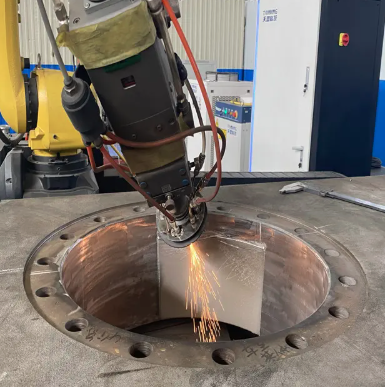
Pretreatment : Clean and polish the surface of the shell to remove oil, rust and oxide layer to ensure good coating adhesion.
Material conveying : The metal powder or wire is transported to the area irradiated by the laser beam through the powder feeder or wire feeder.
Laser cladding : The laser beam is used to melt the conveyed material and fuse it with the surface of the shell to form a uniform coating.
Post-treatment : Heat treatment, machining or polishing of the cladding layer as required to achieve the final size and surface roughness requirements.
The shell processed by laser cladding is widely used in aerospace, automotive, petrochemical, mining machinery and other fields, especially in parts requiring high wear resistance, corrosion resistance or high temperature performance. For example, in aeroengines, laser cladding can be used to strengthen blade edges; In oil drilling equipment, it can be used to improve the wear resistance of the drill bit.
Aerospace Components
Surface strengthening and repair of structural shells exposed to extreme temperature and stress conditions.
Automotive & Powertrain Systems
Laser cladding of engine housings, transmission shells, and wear-prone components for enhanced durability.
Petrochemical Equipment
Corrosion- and wear-resistant cladding for pump housings, valve shells, and pressure components.
Mining & Heavy Machinery
Repair and reinforcement of shells subjected to abrasion, impact, and harsh operating environments.
Energy & Industrial Equipment
Surface enhancement of shells used in turbines, compressors, and high-load industrial systems.
Yes. Laser cladding is suitable for surface enhancement of new shells as well as repair and remanufacturing of worn or damaged components.
Common materials include stainless steel, nickel-based alloys, cobalt-based alloys, and tungsten carbide composites.
Laser cladding forms a metallurgical bond with excellent adhesion strength and low porosity, ensuring long-term reliability.
No. The process has a very low heat input, resulting in minimal thermal distortion and a small heat-affected zone.
Tanmng specializes in advanced laser cladding solutions for industrial shell components, delivering high-performance surface enhancement and precision repair services worldwide. Our laser-clad shells feature excellent wear resistance, strong metallurgical bonding, and minimal thermal distortion, making them ideal for demanding applications in aerospace, automotive, petrochemical, and mining industries.
| Parameter | Description / Options |
|---|---|
| Processing Method | Laser Cladding |
| Base Material | Carbon Steel / Alloy Steel / Stainless Steel |
| Cladding Material | Stainless Steel, Ni-based Alloy, Co-based Alloy, WC Composite |
| Laser Power | To be defined by application requirements |
| Bonding Type | Metallurgical Bond |
| Heat Affected Zone | Minimal |
| Automation Level | Manual / Semi-automatic / Fully automatic |
High Local Precision Control
The laser beam is precisely focused, allowing cladding only in required areas. This reduces material waste, avoids unnecessary heat input, and preserves the mechanical properties of the shell.
Superior Metallurgical Bonding
Laser cladding creates a strong metallurgical bond between coating and substrate, delivering higher bonding strength and lower porosity than traditional surface treatments.
Multi-Material Compatibility
Supports a wide range of metal powders and wires, including nickel-based, cobalt-based alloys, and tungsten carbide, enabling tailored performance for different working conditions.
Repair & Remanufacturing Capability
Ideal for restoring worn or damaged shells, extending component service life and significantly reducing replacement costs.
Low Thermal Distortion
Minimal heat-affected zone ensures dimensional stability and reduces post-processing requirements, improving production efficiency.
High Automation & Consistency
Easily integrated into automated production lines, ensuring stable quality, repeatability, and higher throughput for industrial-scale manufacturing.
Pretreatment : Clean and polish the surface of the shell to remove oil, rust and oxide layer to ensure good coating adhesion.
Material conveying : The metal powder or wire is transported to the area irradiated by the laser beam through the powder feeder or wire feeder.
Laser cladding : The laser beam is used to melt the conveyed material and fuse it with the surface of the shell to form a uniform coating.
Post-treatment : Heat treatment, machining or polishing of the cladding layer as required to achieve the final size and surface roughness requirements.
The shell processed by laser cladding is widely used in aerospace, automotive, petrochemical, mining machinery and other fields, especially in parts requiring high wear resistance, corrosion resistance or high temperature performance. For example, in aeroengines, laser cladding can be used to strengthen blade edges; In oil drilling equipment, it can be used to improve the wear resistance of the drill bit.
Aerospace Components
Surface strengthening and repair of structural shells exposed to extreme temperature and stress conditions.
Automotive & Powertrain Systems
Laser cladding of engine housings, transmission shells, and wear-prone components for enhanced durability.
Petrochemical Equipment
Corrosion- and wear-resistant cladding for pump housings, valve shells, and pressure components.
Mining & Heavy Machinery
Repair and reinforcement of shells subjected to abrasion, impact, and harsh operating environments.
Energy & Industrial Equipment
Surface enhancement of shells used in turbines, compressors, and high-load industrial systems.
Yes. Laser cladding is suitable for surface enhancement of new shells as well as repair and remanufacturing of worn or damaged components.
Common materials include stainless steel, nickel-based alloys, cobalt-based alloys, and tungsten carbide composites.
Laser cladding forms a metallurgical bond with excellent adhesion strength and low porosity, ensuring long-term reliability.
No. The process has a very low heat input, resulting in minimal thermal distortion and a small heat-affected zone.


