
Views: 0 Author: Site Editor Publish Time: 2026-05-14 Origin: Site


Critical machinery unexpectedly breaks down. Suddenly, your entire production schedule grinds to a halt. OEM replacement parts often carry prohibitive lead times lasting several months. Complete component replacement quickly destroys your quarterly maintenance budget. In these high-pressure scenarios, engineers must find reliable repair alternatives. You should view flame spray welding not as a miraculous overnight fix. Instead, treat it as a calculated, metallurgical-based restoration strategy. It provides a proven pathway to rebuild worn surfaces. This method gets critical assets running again quickly. Evaluating this process requires looking closely at its underlying mechanics. You must understand its unique low-heat characteristics compared to traditional arcs. You also need to identify specific operational use cases where it truly shines. Finally, respecting its inherent physical limitations ensures long-lasting repair results. We will explore how to make this practical choice effectively.
Economic Viability: Restoring parts often costs a fraction of total replacement when factoring in operational downtime and teardown logistics.
Low Heat Input: The process minimizes thermal distortion, preserving the original physical properties of the base metal.
Mechanical Constraint: Coatings form a mechanical (not metallurgical) bond; excellent for abrasion and corrosion, but unsuitable for high-impact, point-load stress.
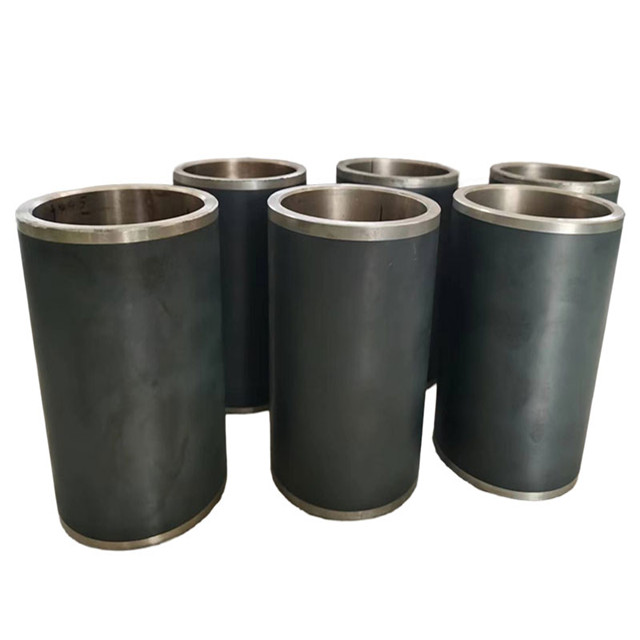
Optimal Targets: Ideal for cylindrical components like a worn Shaft Sleeve, hydraulic rams, and heat-sensitive cast iron parts.
When heavy equipment fails, maintenance managers face a highly stressful choice. You can purchase a brand-new component or repair the damaged one. We must look far beyond the initial sticker price. The true financial impact of OEM replacement involves much more.
First, you calculate the direct purchase cost of the new part. Then, you must add the lost revenue from extended operational downtime. Complex factory lines lose thousands of dollars every hour they sit idle. Finally, you include teardown logistics. Rigging, crating, and shipping massive components requires expensive specialized labor. These hidden factors quickly inflate replacement expenses beyond sustainable levels.
Compare this heavy burden against the restoration economics. A typical spray repair involves three predictable phases. First, machinists pre-machine the worn area to create a uniform surface. Next comes the actual coating application. Finally, precision finishing restores the component to exact OEM dimensions. This streamlined equation saves immense time and capital. Industrial plants routinely restore parts for less than twenty percent of new replacement costs.
You also gain significant lifespan extension. Many engineers frame the process as an interim life-extension tactic. It keeps aging, end-of-life equipment running smoothly until capital budgets open up. Better yet, you can treat the repair as a deliberate upgrade. You can apply harder, more resistant materials over the original base metal. This strategy creates a hybrid part. It drastically outlasts standard factory components in aggressive environments.
Cost Factor | OEM Replacement Strategy | Flame Spray Restoration |
|---|---|---|
Direct Part Cost | High capital expenditure for completely new hardware. | Low material cost focusing only on the worn surface area. |
Downtime | Weeks or months waiting for global supply chain delivery. | Days or hours, often completed locally or on-site. |
Logistics | Heavy freight, complex rigging, and extensive teardown. | Minimal transport. Many repairs happen entirely in-situ. |
Performance | Standard factory materials prone to repeat wear. | Upgraded surface materials for enhanced future durability. |
Many junior engineers confuse this technique with standard arc welding. They operate on entirely different thermal principles. Understanding this difference prevents catastrophic repair failures.
Consider the extreme heat input factor. Traditional high-heat welding melts both the filler wire and the base metal. This creates a deep heat-affected zone. This intense heat risks warping, twisting, and cracking precision parts. Such defects ruin tight-tolerance components permanently. In contrast, you rely on a much safer thermal spray process. It operates at a surprisingly low-heat threshold. Surface temperatures usually remain between 350°C and 450°C. The substrate never truly reaches its melting point. This low thermal load preserves the original physical properties completely. You avoid the stress-relieving steps normally required after arc welding.
Skeptics often question the core bonding mechanics. We must state this reality clearly. The process creates a mechanical bond. It does not form a true metallurgical fusion. Molten particles shoot out of the torch at high velocities. They hit the prepared surface and flatten into microscopic splats. These splats interlock mechanically into the roughened grooves of the base metal.
This unique bonding trait unlocks incredible material versatility. You can easily apply vastly dissimilar materials together. Operators frequently spray dense ceramics onto standard carbon steel substrates. They also apply high-carbon alloys over softer bronze metals. Doing this prevents surface galling. It enhances wear resistance immensely without altering the core ductility of the part.
Low Distortion: Keeps shafts perfectly straight during repair.
Dissimilar Metals: Bonds hard facing onto soft substrates seamlessly.
No Dilution: The coating chemistry remains pure, unlike mixed weld puddles.
Not every broken part qualifies for this specialized treatment. You must assess the geometry, material, and operational stress carefully. Let us break down the ideal targets and strict limitations.
Rotational and sliding wear parts benefit the most from these coatings. We frequently see immense success restoring heavy bearing journals. Pump components also respond beautifully to these low-heat applications. The classic Shaft Sleeve remains a prime candidate. It constantly suffers from abrasive packing seal wear. These cylindrical shapes allow lathes to spin the part evenly. This continuous rotation ensures perfectly uniform coating thickness.
Large-scale or immovable assets provide another perfect scenario. Disassembling massive industrial machinery costs an absolute fortune. In-situ repairs solve this massive logistical headache. Technicians routinely repair massive wind turbine bases on-site. They brave harsh weather to rebuild bearing seats without removing the tower. They also perform refinery boiler aluminizing. This applies anti-corrosive layers without dismantling the entire facility.
Heat-sensitive metallurgy requires a very gentle touch. Brittle cast iron parts often crack under standard welding arcs. Cast iron contains high carbon levels. Arc heat turns this carbon into brittle martensite. The low surface temperature of spray repair prevents this thermal shock. You achieve an uncompromised repair. You avoid inducing catastrophic stress fractures in antique or delicate castings.
We must respect the physical limitations of the process. It is strictly a line-of-sight operation. The spray gun must aim directly at the target surface. It cannot effectively coat deep internal bores. Blind angles, complex internal grooves, and threaded holes will fail. The spray particles simply bounce off.
You must also understand inherent load-bearing limits. The mechanical bond lacks deep metallurgical roots. It shows poor resistance to concentrated point loads. Heavy direct impact will cause the coating to fracture. This leads to severe spalling and rapid part failure. Keep these coatings away from hammer mills, impact crushers, or gear teeth edges.
Great equipment means absolutely nothing without strict quality control. Operators must follow rigid application standards. Skipping minor steps leads directly to premature coating failure.
Surface preparation criticality cannot be overstated. The substrate must undergo aggressive roughening before any spraying begins. Technicians usually achieve this via heavy grit blasting. They use sharp aluminum oxide to create a jagged surface profile. This creates the mechanical teeth needed for particle interlocking. We emphasize one strict industry standard above all others. Spraying must occur within two hours of surface preparation. Waiting longer allows micro-oxidation to form. Invisible rust severely degrades bond strength. Any contamination ruins the entire batch.
Thickness and layering management dictate long-term durability. A minimum functional thickness is typically greater than 0.003 inches. Anything thinner risks porous gaps and weak spots. However, excessively thick coatings introduce dangerous residual stress. If you exceed maximum recommended thicknesses, you must act carefully. We explain the necessity of bond coats in these situations. Spraying an intermediate layer of nickel chromium prevents topcoat cracking. It acts as a flexible shock absorber. It bridges the thermal expansion gap between the hard topcoat and soft base metal.
Application standards separate reliable professionals from careless amateurs. Look for vendors who maintain strict operational discipline.
Spray Angle: Maintain a precise 90-degree angle to the surface. Oblique angles cause particles to skip.
Standoff Distance: Hold a consistent 6 to 8-inch distance. Moving too close burns the part. Moving too far cools the particles prematurely.
Temperature Control: Enforce strict interpass cooling protocols. Pause the spraying to let compressed air cool the part.
These specific best practices ensure maximum particle kinetic energy. They also prevent unintended heat accumulation in the substrate.
Choosing the wrong fabrication partner ruins the entire restoration project. Maintenance managers must ask potential vendors tough, specific questions. You need to verify their technical depth and safety standards before handing over critical parts.
Evaluate their specific equipment capabilities closely. Do they offer multiple thermal spray processes? Basic flame spray works wonderfully for general dimensional repairs. However, advanced wear types require stronger tools. They might need Arc, HVOF, or Plasma systems to spray tungsten carbide. A highly qualified shop matches the exact process to your unique wear problem. Avoid shops offering a one-size-fits-all approach.
Assess their post-spray finishing capacity. Thermal coatings always apply slightly thicker than the final required dimension. Can they handle precision grinding and tight machining? They must return the part to exact OEM dimensional tolerances. Hard ceramics require diamond grinding wheels. A vendor without dedicated in-house grinding cannot finish the job properly. Outsourcing the finishing step introduces unacceptable quality risks.
Verify their safety and compliance records strictly. Do they have rigorous ventilation protocols? Operators sometimes mistakenly heat painted or oiled surfaces. This amateur error releases highly toxic, dangerous fumes into the shop. A safe vendor always chemically strips and bakes parts to degrease them completely. Proper safety infrastructure proves their overall operational maturity. It protects their workers and your valuable equipment.
Let us summarize the key factors. Flame spray welding stands as a highly practical, cost-saving intervention. It delivers excellent dimensional restoration and exceptional surface enhancement. You simply must ensure the operational mechanical limitations are respected. Do not use it for heavy impact zones.
Here are your immediate next steps:
Audit your maintenance scrap bins for high-value worn parts.
Identify cylindrical components currently suffering from sliding friction or corrosion.
Gather your original equipment component drawings and wear data.
Submit these details to a qualified fabrication partner for a localized repair assessment.
Taking these steps reduces your dependence on erratic global supply chains.
A: They operate on entirely different principles. Flame spray is a surface coating thermal spray process using powdered or wire feedstock melted by a gas flame. It only builds up worn surfaces. MIG spray transfer is a high-heat, high-voltage arc welding mode. Welders use MIG specifically for deep structural joining of heavy plates.
A: Yes. The standard procedure involves deliberately over-spraying the worn area to add extra material. Technicians then use precision machining or diamond grinding. They cut the new coating down to the exact original OEM tolerance, ensuring a perfect mechanical fit.
A: The bond is extremely durable against abrasive wear, sliding friction, and chemical corrosion. However, it will fail under high-impact, concentrated point loads. Because it relies on mechanical interlocking rather than deep metallurgical fusion, heavy strikes can cause the coating to spall.