
Views: 0 Author: Site Editor Publish Time: 2026-06-14 Origin: Site


Metal components operating in high-friction, extreme-heat, or severely corrosive environments inevitably fail without surface-engineered protection. While applying surface solutions solves fundamental material limitations, the specific application method dictates overall performance, layer adhesion, and eventual return on investment. Plant managers and mechanical engineers frequently face a difficult choice when selecting the right surface treatment. Deciding between traditional thermal methods, HVOF, chemical vapor deposition, and advanced ionized gas processes is critical to preventing catastrophic component failure. Using the wrong application method leads to premature spalling, compromised substrates, and massive production losses.
This guide provides an evidence-based framework for evaluating when you should rely on ionized gas methods for applying ceramic coating for metal parts. We explore practical constraints you must plan for and show how to specify engineering requirements for commercial scaling. You will learn exactly how to match specific powders to your operational demands.
Temperature Superiority: Plasma spray generates extreme temperatures (up to 20,000°C), making it the only viable method for melting and depositing high-melting-point ceramics like pure zirconia.
Substrate Safety: Rapid cooling dynamics (milliseconds) mean the underlying metal substrate rarely exceeds 150°C, preventing metallurgical distortion.
Process Constraints: Plasma spraying is a strictly line-of-sight process; complex internal cavities require specialized workarounds or alternative methods.
Lifecycle Economics: For high-wear environments, appropriately specified plasma-sprayed ceramics can extend component lifespan up to 5x compared to uncoated metals, drastically reducing downtime costs.
Industrial machinery degrades rapidly when exposed to severe operational demands. Left unprotected, core metal substrates yield to three primary failure modes: abrasive wear, galvanic corrosion, and thermal degradation. Applying engineered ceramics directly mitigates these failures. Oxide ceramics possess immense hardness, often exceeding 60 HRC, which effectively blocks abrasive particles from scoring the underlying metal. Furthermore, these materials are chemically inert. They prevent corrosive liquids from triggering galvanic reactions on steel or aluminum surfaces. When equipment operates near furnaces or inside combustion chambers, ceramics act as powerful insulators. They shield the base metal from catastrophic thermal fatigue.
Financial justification requires looking beyond the initial application invoice. You must compare the upfront cost of the coating against the heavy burdens of unexpected downtime. When a critical pump seal or hydraulic ram fails, a facility loses money every minute production stops. You also face the direct costs of procuring replacement parts and paying expedited shipping fees. Add the expensive maintenance labor required to tear down and rebuild the machinery. Investing in a robust surface treatment drastically reduces these recurring penalty costs. Extended lifecycles keep production schedules predictable and highly profitable.
We also see immense commercial value in dimensional restoration. Machine parts eventually wear down and fall out of standard dimensional tolerances. Historically, facilities scrapped these undersized components. Today, engineers apply thick ceramic build-ups to salvage worn parts. Once applied, machinists grind the newly coated surface back to the precise original equipment manufacturer (OEM) specifications. This restoration strategy prevents perfectly good base metals from ending up in the scrap bin, saving thousands of dollars per component.
Evaluating surface treatments requires comparing thermal dynamics, kinetic energy, and material compatibility. Engineers must understand where plasma spray coating excels and where alternative methods fit better.
HVOF relies on extreme kinetic energy. The process accelerates powder particles to Mach 5 speeds, slamming them into the substrate. This creates ultra-dense, nearly 98% pore-free layers. HVOF represents the gold standard for applying tungsten carbides. However, HVOF utilizes combustion flames that peak around 3,000°C. Many advanced oxide ceramics simply will not melt at these temperatures. Plasma jets reach up to 20,000°C. This extreme thermal output makes ionized gas methods mandatory for melting and depositing high-temperature oxide ceramics.
Hard anodizing is an excellent electrochemical process, but it suffers from one massive constraint: it only works on aluminum substrates. If your parts consist of stainless steel, titanium, or proprietary superalloys, anodizing is completely useless. Ionized gas processes are entirely substrate-agnostic. You can successfully deposit thick, robust ceramics onto virtually any metallic alloy without altering the underlying metallurgy.
Traditional arc spray requires conductive wire feedstocks. If you cannot draw a material into a conductive wire, you cannot spray it. This eliminates almost all advanced ceramics. Ionized gas systems utilize powder feedstocks instead. Using powders unlocks an infinite catalog of complex ceramic matrix composites (CMCs). You achieve vastly superior bond strength and significantly higher density compared to basic combustion flame sprays.
Application Method | Primary Mechanism | Key Material Capability | Primary Limitation |
|---|---|---|---|
Plasma Spray | Ionized gas arc heating | High-melting-point oxide ceramics | Line-of-sight physical constraint |
HVOF | Supersonic combustion | Tungsten carbides, metal alloys | Insufficient heat for pure ceramics |
Hard Anodizing | Electrochemical conversion | Aluminum oxide formation | Strictly limited to aluminum base metals |
Arc Spray | Electric arc melting | Zinc, aluminum, basic steels | Requires conductive wire feedstocks |
The success of any surface engineering project hinges on material selection. You must match the specific ceramic powder to the precise environmental hazard your component faces. Below are the most prominent formulations used in severe industrial applications.
Zirconia (YSZ - Yttria-Stabilized Zirconia): Engineers specify YSZ primarily for Thermal Barrier Coatings (TBCs). This specific powder excels at managing extreme heat. It actively protects turbine blades and heavy furnace components. By applying YSZ, you can lower the underlying metal surface temperature by hundreds of degrees, preventing premature melting or warping.
Chromium Oxide: When confronting extreme sliding wear and harsh chemicals, chromium oxide serves as the definitive choice. It boasts massive hardness and chemical inertness. However, you must observe its primary constraint. It remains highly effective only below 540°C (1000°F). Above this threshold, it begins to degrade. Facilities frequently specify this formulation for pump seals, anilox printing rolls, and heavy-duty hydraulic rams.
Alumina (Aluminum Oxide) & Alumina-Titania Blends: This category delivers excellent dielectric shielding alongside robust sliding wear resistance. Alumina prevents electrical arcing in high-voltage industrial applications. Blending it with titania increases the coating's toughness, making it less prone to brittle micro-cracking while maintaining strong chemical inertness.
Always verify the exact operating temperature of your equipment before specifying chromium oxide.
Consult your engineering team regarding the required porosity levels; higher porosity improves thermal insulation but lowers wear resistance.
Demand strict batch tracking from your vendor to ensure the powder formulation matches the required ISO specifications.
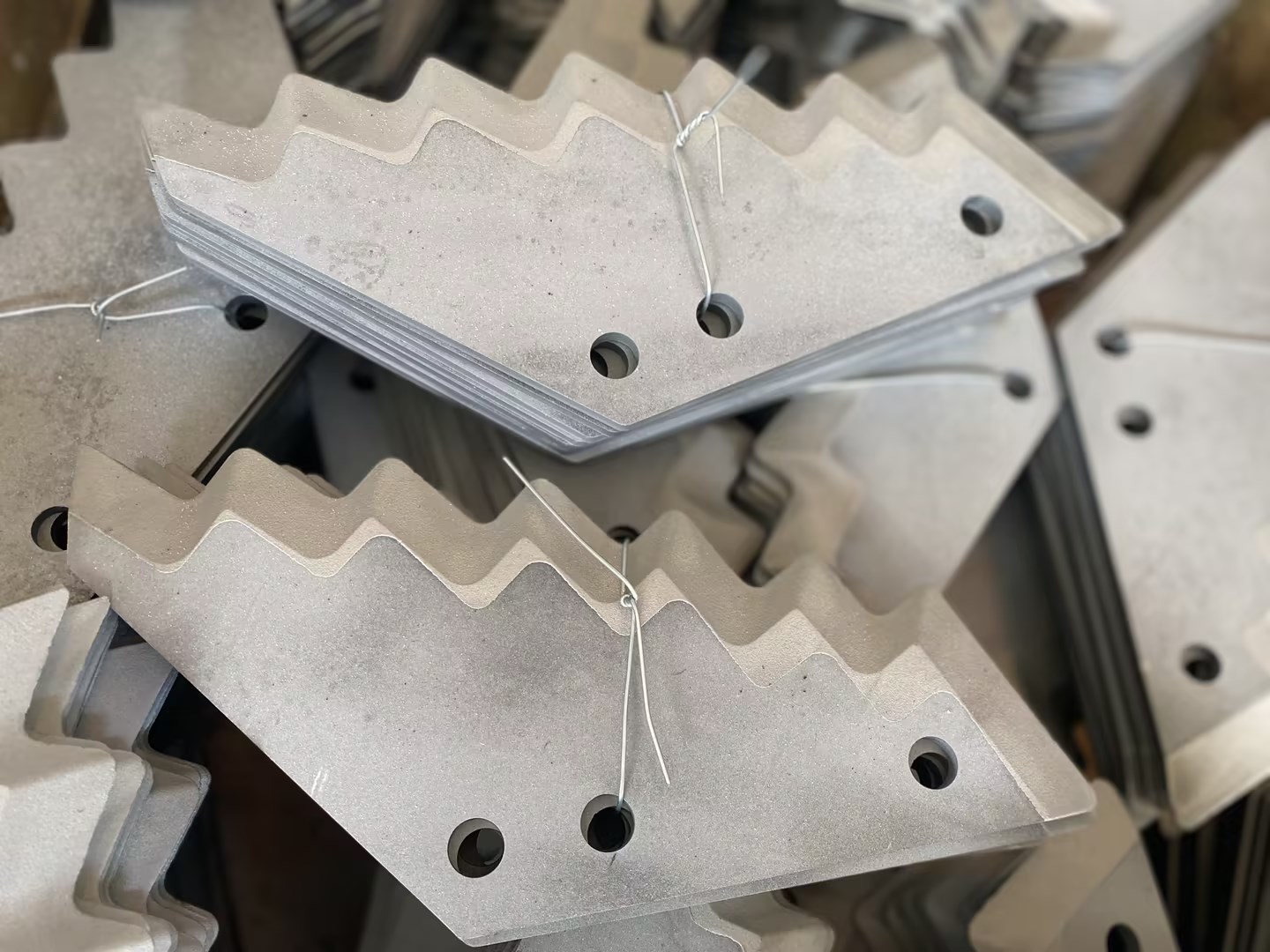
Specifying the perfect powder represents only half the battle. You must also navigate strict physical constraints and demand rigorous surface preparation. Missing these critical steps leads to catastrophic delamination.
First, you must acknowledge the "line-of-sight" limitation. The ionized jet shoots out of the nozzle in a straight, highly directional path. The particles must impact the substrate at a near-perpendicular angle to adhere correctly. This physical constraint heavily impacts the processing of complex internal cavities. Coating deep bores, narrow internal diameters, or highly intricate geometric undercuts proves extremely difficult. If your part features tight internal channels, you often need specialized miniaturized internal diameter (ID) guns or must consider alternative surface treatments entirely.
Crucial surface preparation dictates the lifespan of the entire project. You cannot spray advanced materials onto a smooth, oily, or oxidized surface. The substrate requires aggressive grit blasting and surface roughening to create a microscopic jagged profile. The incoming melted particles crash into this rough profile, mechanically interlocking with the metal. Industry data shows that 90% of premature delamination failures stem directly from sub-standard substrate preparation. Your vendor must clean the part perfectly and spray it immediately before flash rusting occurs.
Finally, we must examine the role of bond coats. You rarely spray hard oxides directly onto bare steel. Ceramics and metals react differently to heat. Metals expand rapidly when heated, while ceramics remain relatively static. This difference in the coefficient of thermal expansion (CTE) causes direct ceramic-to-metal applications to shear and crack off. To solve this, operators apply an intermediate metallic layer. We typically use MCrAlY alloys (Metal, Chromium, Aluminum, Yttrium). This bond coat provides a structural bridge. It expands slightly more than the ceramic but less than the steel, absorbing the thermal stress and keeping the topcoat securely anchored.
Moving a successful prototype into full-scale production requires careful vendor evaluation. Finding a reliable partner to deliver Thermal Spray Customized Products demands strict oversight regarding quality assurance and repeatability.
When transitioning from prototype to production, you must audit the vendor's physical capabilities. Do they rely on manual application? Hand-spraying introduces massive human error. An operator cannot perfectly maintain a static standoff distance or consistent traverse speed while holding a heavy gun emitting intense heat and UV radiation. You must demand automated robotic application. Robots guarantee that every single component receives the exact same density and thickness, eliminating manual variances.
Quality assurance and traceability protect your supply chain. Require key compliance markers before signing any volume contracts. Check for updated ISO certifications. Insist on strict powder lot number tracking. If a field failure occurs six months later, you must possess the ability to trace that specific part back to the exact barrel of powder used during application. This traceability allows you to identify root causes rather than guessing at variables.
You can also request advanced customization and topcoat impregnation. Engineers frequently combine application methods to achieve dual properties. For example, a vendor can apply a slightly porous base matrix. Afterward, they vacuum-impregnate this matrix with liquid fluoropolymers like PTFE (Teflon). Once cured, the final surface delivers the extreme mechanical hardness of the ceramic structure alongside the ultra-low friction, non-stick properties of the polymer. This hybrid approach solves severe challenges in packaging, molding, and food processing equipment.
Deploying advanced ionized gas methods requires higher upfront engineering rigor, but the operational payoffs are immense. The unique ability to deposit ultra-high-temperature oxides without warping the underlying metal substrate makes this process completely indispensable for severe-service components. By utilizing engineered formulations, you protect expensive machinery from abrasion, corrosion, and catastrophic thermal fatigue.
To successfully implement this technology, your engineering teams should take the following next steps:
Compile your exact operating parameters, including peak temperatures, pH exposure levels, and specific wear types (abrasive vs. sliding).
Evaluate all part geometries to identify potential line-of-sight constraints or difficult internal bores.
Consult with a specialized surface engineering partner to define exact powder formulations, necessary bond coats, and robotic application procedures.
Establish strict QA guidelines, requiring powder lot traceability and specific surface preparation standards prior to full-scale production.
A: No. Pure ceramic coatings (like Alumina or Silica) are 100% PTFE-free, making them ideal for high-temperature and compliant environments. However, polymer sealants can be added post-spray if non-stick properties are specifically required.
A: Thicknesses typically range from 0.05mm to 0.5mm for wear applications, but can exceed 2mm for dimensional restoration, depending on the residual stress capacity of the specific ceramic powder.
A: The extreme heat, intense UV radiation, and need for precise, repeatable standoff distances (distance from nozzle to part) make robotic automation necessary to ensure consistent coating density and prevent human error.